
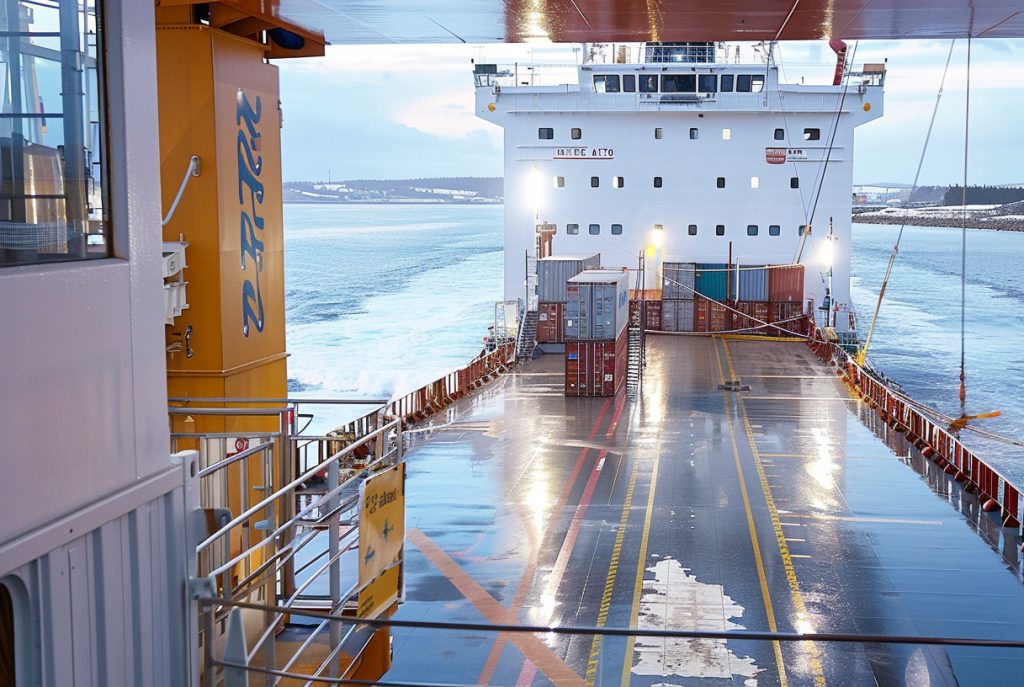
Cargo ships need internet everywhere — in port during loading, while waiting at anchor, when clearing customs, and throughout long stretches at sea. Yet many providers still fail to optimize for one of the most critical aspects of maritime connectivity: the seamless transition from shore to open water.
According to UNCTAD’s Review of Maritime Transport 2024, global port throughput continues to rise, thanks in part to smarter digital operations and improved connectivity that help ports handle cargo more efficiently. Shore-side networks are catching up fast, with LTE and 5G coverage in major harbors, gigabit-class access points, and specialized maritime solutions that minimize downtime during customs, maintenance, or loading. For example, Nowhere Networks has already deployed gigabit port connectivity in hubs like Stockholm, Copenhagen, and Rotterdam, helping vessels stay connected without relying on expensive satellite links while docked.
The Port-to-Sea Handoff
The real test comes as vessels depart. Modern hybrid systems make this transition automatic:
- LTE/5G while docked
- Land-based radio or LEO satellites once underway
- Priority routing that keeps logs, manifests, and diagnostics flowing without interruption
This handoff ensures that operational data isn’t lost when a vessel moves from shore to sea, and that crew and administrative systems remain stable throughout the journey.
What Operators Should Ask
- Which ports in your routes already support LTE or hybrid coverage?
- Does your provider offer dynamic, policy-based traffic prioritization?
- How seamless is the handoff from port networks to offshore bearers?
Choosing a provider with true port-to-sea capability means smoother operations, happier crews, and fewer surprises on the horizon.